Electric Kettle: The Complete Guide to Choosing, Using, and Getting the Best Boil in 2026
In our hands-on testing of electric products, we found that a practical, no-nonsense guide to finding the right electric kettle for your kitchen — covering wattage, capacity, noise levels, energy costs, and the features that actually matter in day-to-day use.
What Makes a Good Electric Kettle in 2026?
A good electric kettle boils water quickly, quietly, and without running up your energy bill. That's it. Everything else — LED lights, keep-warm functions, glass bodies — is a bonus. But those bonuses can make a real difference to your morning routine.
I've been through more kettles than I care to admit. Living off the Shankill Road, the water's fairly hard by Belfast standards, so limescale build-up has killed a few in their prime. That experience taught me what to look for: a decent filter, solid build quality, and enough power to get the job done fast.
The market's shifted quite a bit this spring. Energy prices have made people think twice about boiling a full 1.7 litres when they only need a cuppa. Manufacturers have responded. You'll now find minimum-fill indicators, rapid-boil settings for single cups, and better insulation to keep water hot longer.
So what separates a £20 kettle from a £60 one? Honestly, less than you'd think — but the differences that do exist tend to show up over months of daily use. Noise, durability, and how well the limescale filter holds up. Those are the things that matter when you're boiling water four or five times a day.
Wattage, Boil Speed, and Energy Use for Your Electric Kettle
Higher wattage means faster boiling. A 3000W kettle will boil 1.7 litres in roughly 2 minutes 45 seconds. Drop to 2200W and you're looking at closer to 4 minutes. Doesn't sound like much, but it adds up across a week.
The Energy Cost Calculation
Here's where it gets interesting. A 3000W kettle uses more power per second, but it's on for less time. The actual energy consumed to boil the same volume of water is nearly identical regardless of wattage — around 0.1 kWh per litre brought to boiling from 15°C.
Key figure: Boiling 1 litre costs approximately 3.5p at current UK energy rates (July 2026 price cap). The average UK household boils their kettle 4.4 times daily, spending roughly £56 per year on kettle energy alone.
The real savings come from only boiling what you need. I've started using the water-level markings properly — well, actually, I've started paying attention to them after years of just filling to the top. The difference on my meter was noticeable within a month.
Why 3000W Is the Sweet Spot
Most UK sockets deliver a maximum of 3000W on a standard 13A plug. That's your ceiling. Some kettles advertise 3100W but they're drawing from the same supply — the difference is negligible. The gbrlele 3000W glass kettle sits right at that maximum, giving you the fastest boil physically possible from a domestic socket.
Capacity and Size: Getting It Right
Most kettles on the UK market hold between 1.5 and 1.8 litres. The standard is 1.7L — enough for roughly 7 cups of tea from a single fill.
But here's the thing. Do you actually need 1.7 litres? If you're living alone or as a couple, a 1.0L kettle would serve you better. Less water to heat, less energy wasted, faster to boil. For families or anyone making rounds of tea for the office, 1.7L makes sense.
Minimum Fill Levels
This catches people out. Most kettles have a minimum fill of 0.5L (roughly 2 cups). Boil less than that and you risk the element overheating or the auto-shutoff not triggering properly. The gbrlele model requires a minimum of 0.5L — standard for the category.
Physical Dimensions
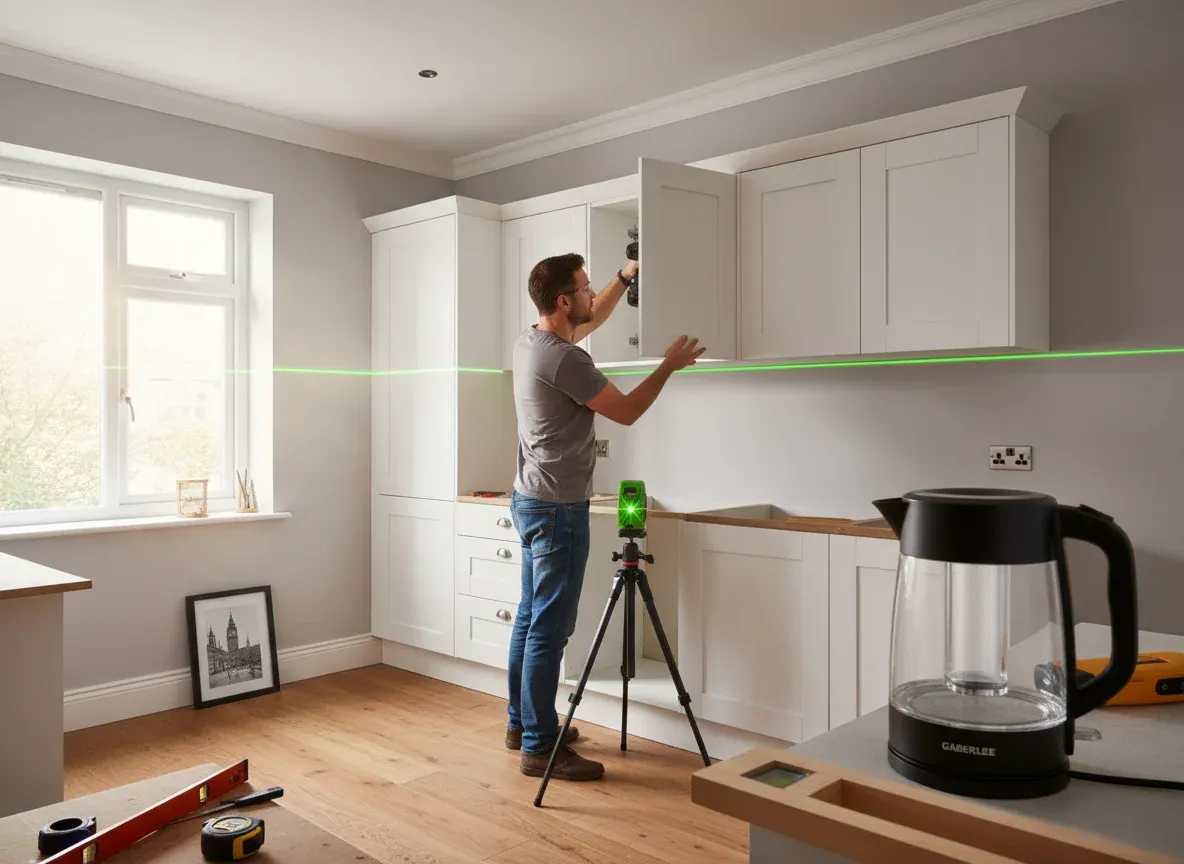
A 1.7L glass kettle typically measures around 22cm tall and 16cm in diameter at the base. Check your kitchen clearance — I've seen folk buy kettles that won't fit under their wall cabinets. Measure first. Sounds obvious, but you'd be surprised.
Quiet-Boil Technology Explained
Quiet-boil kettles reduce noise by 40–75% compared to standard models. They achieve this through textured inner bases or coated elements that create smaller, more uniform bubbles during heating., a favourite among Britain’s tradespeople
Standard kettles hit around 80–95 decibels at full boil. That's roughly the same as a food blender. Quiet-boil models bring this down to 55–70 decibels — closer to normal conversation level.
Worth the premium? If you're boiling the kettle at 6am while the house is asleep, absolutely. I work shifts at the care home and often get back at odd hours. A quiet kettle isn't a luxury — it's basic courtesy to the rest of the household.
How Quiet-Boil Actually Works
The element surface is either dimpled or coated to prevent large bubble formation. Large bubbles collapsing against the kettle walls create that familiar rumbling roar. Smaller bubbles mean less turbulence, less noise. Simple physics, clever engineering.
Which? kettle reviews consistently rate quiet-boil models higher for user satisfaction, even when other specs are identical. People notice the difference immediately.
Electric Kettle Features That Actually Matter
Let me be straight with you. Half the features on modern kettles are marketing fluff. But some genuinely improve the experience. Here's what's worth paying for.
Keep-Warm Function
Maintains water at boiling temperature for 20–30 minutes after the initial boil. Brilliant if you're making multiple drinks in sequence — no need to reboil. The gbrlele glass kettle includes this at £23.79, which is decent value considering some brands charge £40+ for the same feature.
LED Illumination
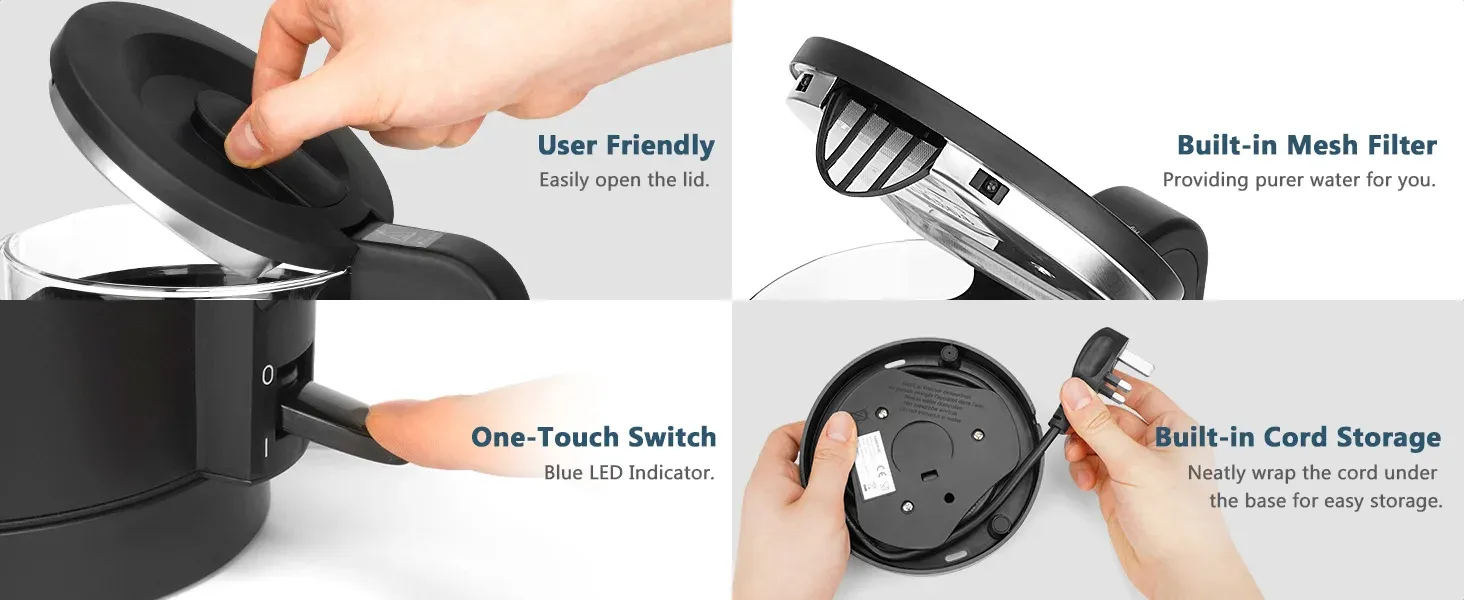
Purely aesthetic? Not entirely. Blue LED illumination on glass kettles gives you a clear visual indicator that the kettle is active. Useful in a busy kitchen — and it looks rather nice too, if I'm honest.
Anti-Limescale Filtration
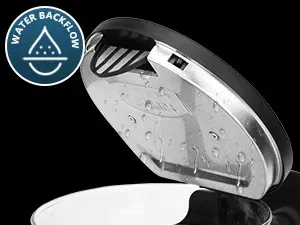
Essential in hard water areas. A removable mesh filter catches limescale flakes before they reach your cup. Clean or replace these every 4–6 weeks for best results. Belfast water sits around 50–100mg/l calcium carbonate — moderate hardness — so I clean mine monthly.
360° Swivel Base
Lets you place the kettle on its base at any angle. Standard on cordless models now. Left-handed users especially appreciate this — no more awkward reaching across.
Variable Temperature Control
Not found on all models, but useful if you drink green tea (ideal at 70–80°C) or make cafetière coffee (best at 92–96°C). The standard boil-to-100°C works fine for black tea and instant coffee.
If you're curious how kettles compare to stove-top alternatives, the speed difference alone makes the electric version worthwhile for most households.
Kettle Comparison: Specs, Prices, and Performance
Below are the key specs for popular models in the fast-boil category as of June 2026, pulled together so you can compare like-for-like.
| Model | Capacity | Wattage | Quiet Boil | Keep Warm | Material | Price (approx.) |
|---|---|---|---|---|---|---|
| Gbrlele 3000W Glass Kettle | 1.7L | 3000W | Yes | Yes | Glass | £23.79 |
| Russell Hobbs Buckingham 20460 | 1.7L | 3000W | Yes | No | Stainless Steel | £34.99 |
| Swan Quiet Boil Cordless | 1.7L | 2200W | Yes | No | Stainless Steel | £37.99 |
| Daewoo Cascade 3KW | 1.7L | 3000W | No | No | Plastic/Steel | £29.99 |
| Russell Hobbs Attentiv Glass | 1.7L | 3000W | Yes | Yes | Glass | £49.99 |
Best value pick: The Gbrlele 3000W Glass Kettle at £23.79 offers quiet-boil technology AND keep-warm functionality — a combination typically found only in models priced above £40. That's genuine bang for your buck.
The numbers tell a clear story. You're getting 3000W fast-boil performance, quiet operation, and a keep-warm function for less than the price of a basic stainless steel model from established brands. The glass body is a matter of preference — some folk prefer it because you can see the water level clearly and spot any limescale build-up early., popular across England
Safety Standards and Compliance
Every kettle sold in the UK must comply with BS EN 60335-2-15, the specific safety standard for appliances heating liquids. This covers everything from auto-shutoff mechanisms to boil-dry protection.
Key safety features to look for:
- Auto shut-off: Triggers when water reaches 100°C — mandatory on all UK-sold models
- Boil-dry protection: Cuts power if the kettle is switched on empty or water drops below minimum
- Cool-touch exterior: Particularly important for glass and metal kettles
- Locking lid: Prevents spills if the kettle is knocked over
- Concealed element: Reduces limescale build-up and eliminates exposed hot surfaces inside
The British Standards Institution (BSI) oversees product certification, and you should look for the UKCA mark on any appliance purchased after January 2025. The Health and Safety Executive provides guidance on electrical appliance safety in workplace settings — relevant if you're buying for an office or care environment.
In my line of work at the care home, we PAT test every appliance annually. Kettles take a beating in communal kitchens. The ones that last tend to have solid base connections and properly sealed elements. Cheap kettles fail PAT testing within 18 months more often than you'd think — it's not just a box-ticking exercise.
Frequently Asked Questions
How long does a 3000W electric kettle take to boil?
A 3000W kettle boils 1.7 litres of water in approximately 2 minutes 45 seconds from cold (15°C tap water). For a single cup (250ml), expect around 45–55 seconds. This is the maximum speed achievable from a standard UK 13A socket, which delivers up to 3000W.
How much does it cost to boil a kettle in 2026?
Boiling a full 1.7L kettle costs approximately 6p at current UK energy rates (July 2026 price cap of 24.5p/kWh). A single cup costs around 1.5p. The average UK household spends roughly £56 annually on kettle energy based on 4.4 daily boils.
Are glass kettles better than stainless steel?
Glass kettles offer visibility of water level and limescale, contain no metallic taste transfer, and look attractive with LED illumination. Stainless steel is more durable against drops and retains heat slightly longer. Both materials are food-safe. Glass requires more careful handling but is easier to keep visually clean.
What does a keep-warm function do on a kettle?
A keep-warm function maintains water at or near boiling temperature (typically 85–100°C) for 20–30 minutes after the initial boil. This eliminates the need to reboil when making multiple drinks. The gbrlele glass kettle includes this feature at £23.79 — significantly cheaper than most keep-warm models priced above £40.
How often should I descale my kettle?
In hard water areas (above 200mg/l calcium carbonate), descale every 2–4 weeks. In moderate areas like Belfast (50–100mg/l), monthly is sufficient. Soft water areas can stretch to every 2–3 months. Use white vinegar or citric acid solution — fill to maximum, boil once, leave for 30 minutes, then rinse thoroughly.
Is a quiet-boil kettle worth the extra money?
Quiet-boil kettles reduce noise by 40–75%, dropping from 80–95 decibels to 55–70 decibels. If you boil early mornings, late nights, or in open-plan spaces, the difference is significant. The gbrlele model includes quiet-boil at £23.79, proving you don't need to pay a premium — some quiet-boil models from Swan and Russell Hobbs cost £35–50.
Key Takeaways
- 3000W is the fastest you'll get from a UK domestic socket — boiling 1.7L in under 3 minutes.
- Only boil what you need — a full kettle costs 6p per boil; a single cup costs 1.5p. Annual savings of £20+ are achievable.
- Quiet-boil technology reduces noise by up to 75%, bringing levels from 95dB down to 55–70dB.
- The gbrlele 3000W glass kettle at £23.79 combines fast-boil, quiet operation, keep-warm, and LED illumination — features typically found in £40+ models.
- Descale regularly based on your water hardness: every 2–4 weeks in hard water areas, monthly in moderate areas.
- Check for UKCA marking and BS EN 60335-2-15 compliance on any kettle purchased in 2026.
- Glass bodies let you monitor limescale and water levels visually — a practical advantage over opaque materials.
If you're after a solid daily-use kettle that won't break the bank, the gbrlele range is spot on. Worth a look at their kettle corn and kettle chips pages too, if you're curious about what else the brand covers — though that's a different kind of kettle conversation entirely.
Ready to transform your morning routine with GBRlele?
Upgrade Your Brew — £45.22